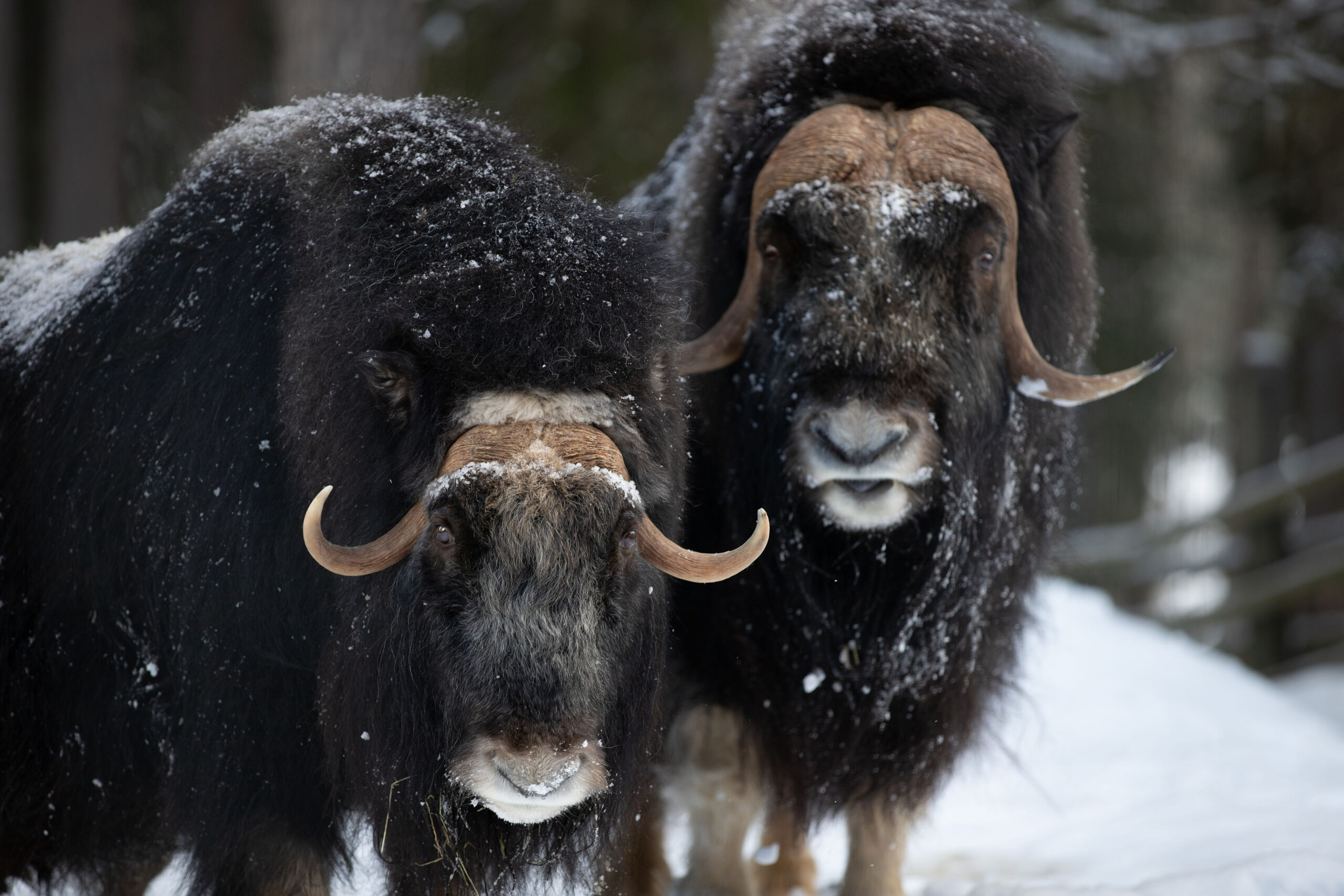
(Ovibos moschatus) The musk ox is the last of the great prehistoric animals. They lived alongside mammoths and woolly rhinoceroses during the last ice age—even in our country. While the mammoths and rhinoceroses have long been extinct, the musk ox lives on in the barren and cold tundra regions. Musk oxen died out in Scandinavia 3,000 years ago. In the summer of 1971, a handful of musk oxen migrated into Härjedalen from Norway. By the mid-80s, the population was around 34 animals. The musk ox’s only natural enemy is the wolf. As a defense against wolf attacks, adult musk oxen stand in a tight circle (with their horns facing outward) around the calves. The wolves find it extremely difficult to get past this “living wall” to reach the calves.
Quick facts about Musk ox
- Order
- Order: Even-toed ungulates (Artiodactyla)
- Family
- Bovids (Bovidae)
- Weight
- Between 225–400 kg; bulls are significantly heavier than cows
- Lifespan
- approx. 20 years
- Mating season
- July–August
- Gestation
- 7–9 months
- Young
- Born in April–June the following year







Our Mission
More and more animal species around the world are threatened with extinction, and the list of species at risk of disappearing continues to grow. The conservation of threatened species is now a shared responsibility for zoos around the world. Our aim is to create greater understanding of the irreplaceable value of nature and biodiversity. Through research, we learn more about the animals, giving us greater opportunities in our work to conserve endangered species. Our three most important missions as a zoo are: conservation, education and research.