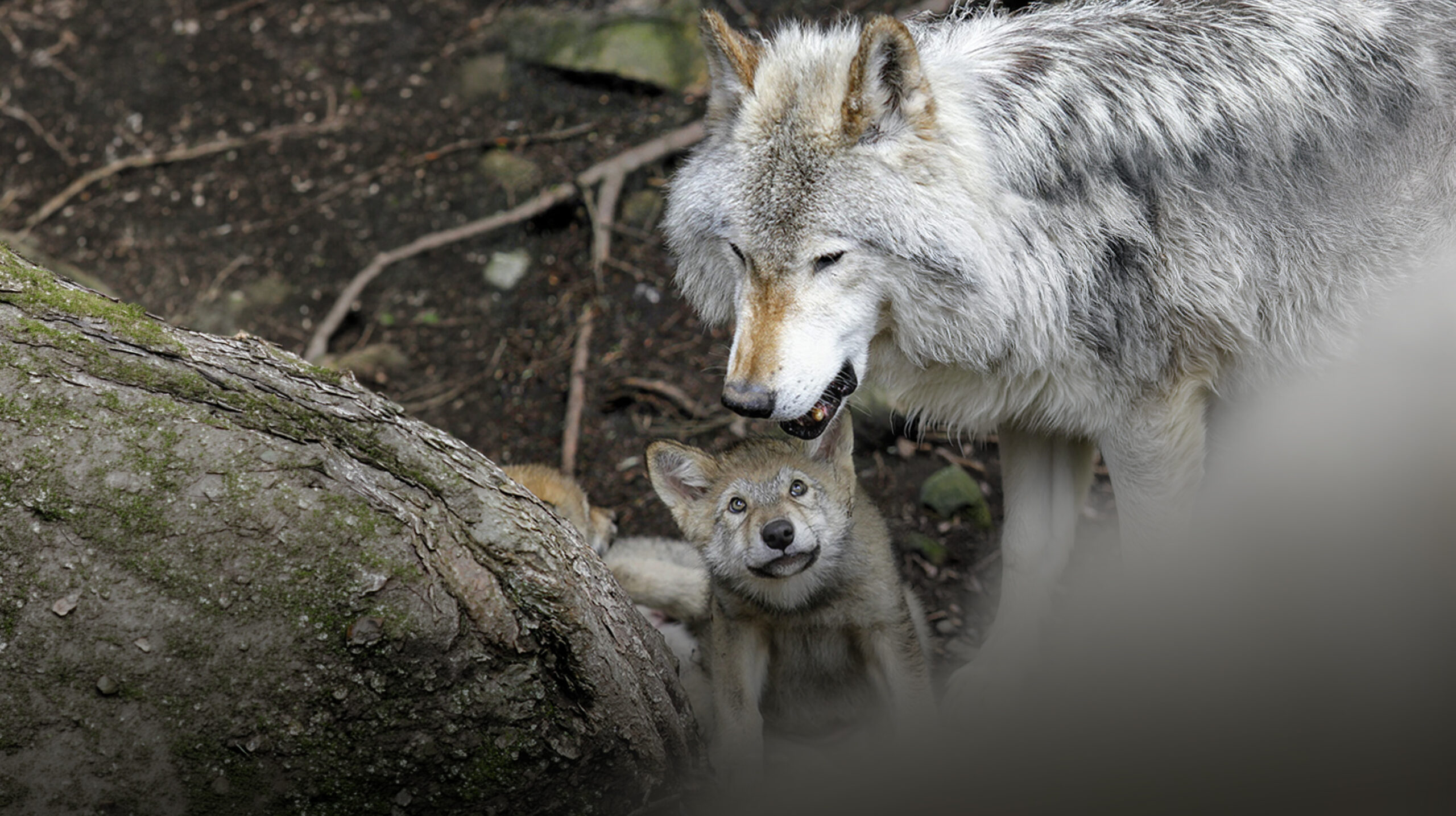
(Canis lupus) The wolf was one of the first animals to migrate into Sweden after the Ice Age. 150 years ago, it was found throughout the country. Due to intensive hunting, the wolf was close to extinction during the 1970s and 80s. In 1966, the wolf was protected in Sweden. Since the mid-1980s, the number of wolves has slowly increased; in the early 2000s there were about 100.
Quick facts about Wolf
- Order
- Order Carnivora
- Family
- Canines (Canidae)
- Weight
- Males around 45 kg (in Sweden), females around 40 kg (in Sweden)
- Lifespan
- Up to 16 years, but most often they don’t live longer than 10–12 years
- Mating season
- Occurs during December–April
- Gestation
- approx. 63 days
- Young
- Normally 2–8 pups







Hear more about the wolf
Learn more about the wolf's daily life, habits, and life in the wild
The forest’s smart team player
The wolf is one of our most fascinating predators. It is intelligent, curious, and incredibly skilled at working together with its pack. Here you can get to know the wolf a little better.
Quiet… did you see something moving over there? Wolves are experts at moving unnoticed through the forest. Even though they can be over two metres long from nose to tail, they are often hard to spot.
Did you know that…
• Wolves can communicate with each other over long distances.
• They have a highly developed sense of smell.
• A pack works together when hunting and caring for their pups.
• The wolf is one of the Nordic region’s most social predators.
How the wolf lives
Wolves live in packs where everyone has an important role. Together they protect the pack, care for the young, and help each other survive.
Just like in a team, the pack works best when everyone cooperates.
Here in the zoo
When you watch the wolves, try to spot how they behave towards each other.
• Which ones stick together?
• Is there anyone who seems to lead the group?
• How do they communicate with each other?
Look closely—you might notice something that reminds you of how people work together.
Why we have the wolf here
At Lycksele Djurpark, we work to increase knowledge about Nordic animals. By learning more about the wolf and its habitat, we can also understand why it is important for nature.
When you visit the zoo, you help us continue our work to spread knowledge and create engagement for our Nordic animals.
Our Mission
More and more animal species around the world are threatened with extinction, and the list of species at risk of disappearing continues to grow. The conservation of threatened species is now a shared responsibility for zoos around the world. Our aim is to create greater understanding of the irreplaceable value of nature and biodiversity. Through research, we learn more about the animals, giving us greater opportunities in our work to conserve endangered species. Our three most important missions as a zoo are: conservation, education and research.