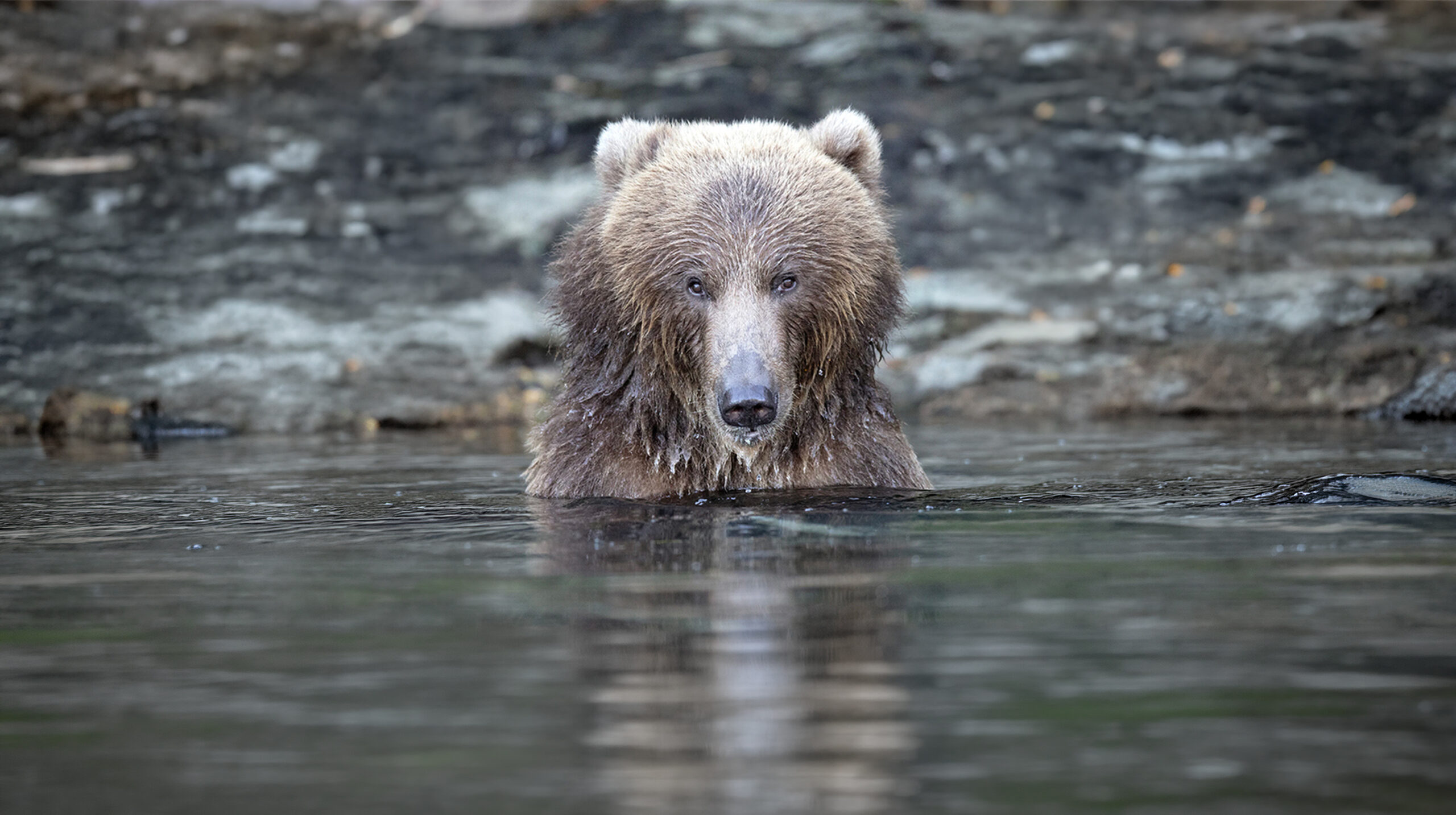
(Ursus arctos) The brown bear is a forest-dwelling animal that lives in the coniferous forest regions of Northern Europe, Asia, and North America, where it is known as the grizzly in certain areas. The Swedish bear population of a few thousand animals is slowly increasing despite a general hunt for the species. The bear is a so-called plantigrade, meaning it walks on the entire sole of its foot, just like we do.
Quick facts about Brown bear
- Order
- Order Carnivora
- Family
- Bears (Ursidae)
- Weight
- Up to 350 kg (males in Sweden), up to 160 kg (females in Sweden)
- Lifespan
- 20 – 30 years
- Mating season
- Occurs in May-June
- Gestation
- 7-8 months, but the actual fetal development is 2-3 months, known as delayed implantation.
- Young
- 1-3 cubs (sometimes 4 or 5) are usually born in January in the den during winter hibernation.






Hear more about the brown bear
Learn more about the brown bear's daily life, habits, and life in the wild
Our Mission
More and more animal species around the world are threatened with extinction, and the list of species at risk of disappearing continues to grow. The conservation of threatened species is now a shared responsibility for zoos around the world. Our aim is to create greater understanding of the irreplaceable value of nature and biodiversity. Through research, we learn more about the animals, giving us greater opportunities in our work to conserve endangered species. Our three most important missions as a zoo are: conservation, education and research.