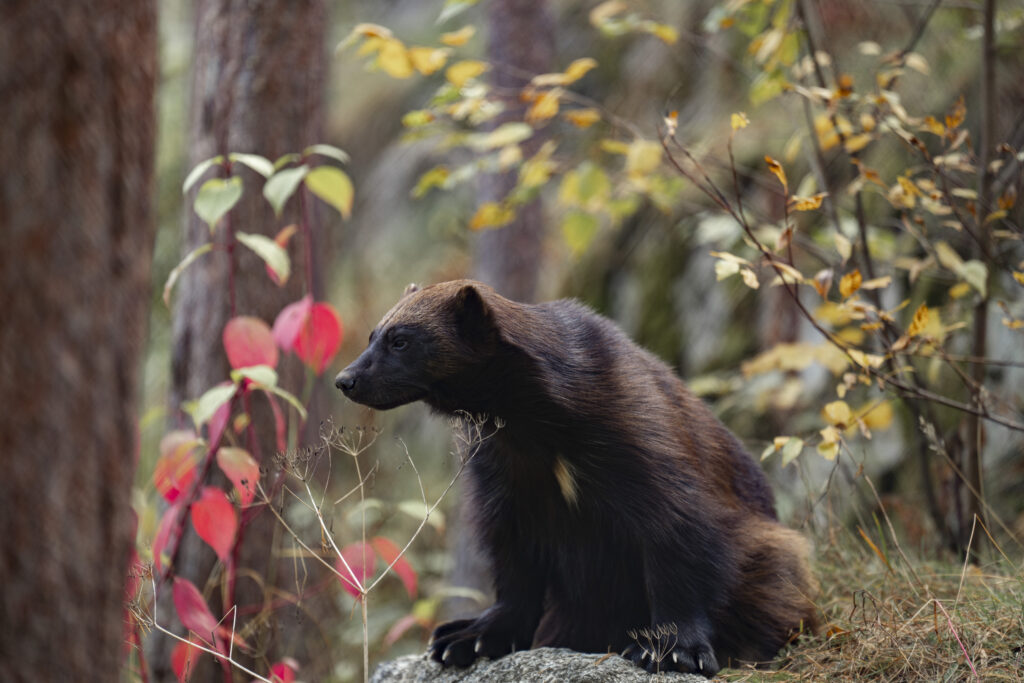
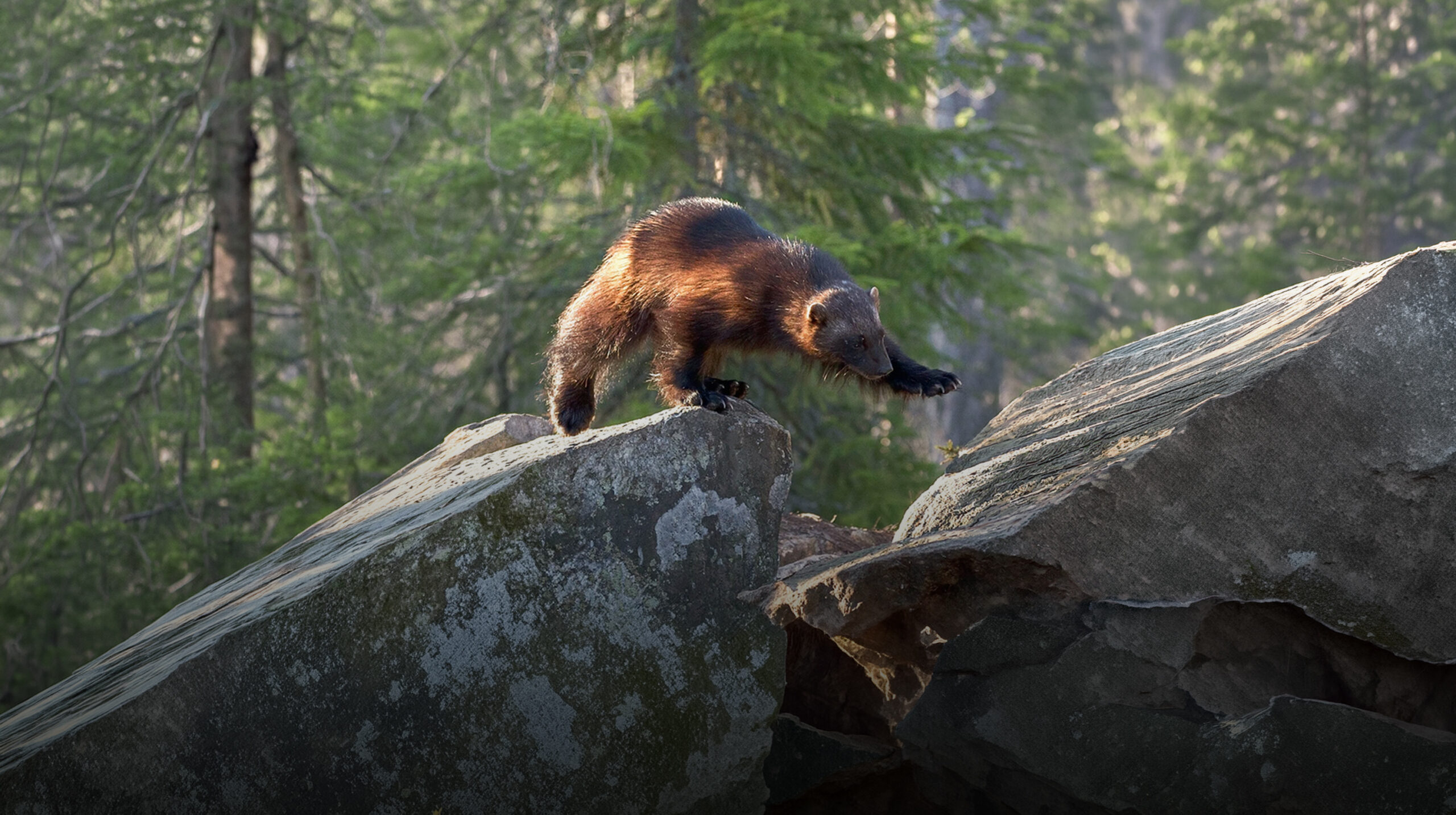
(Gulo gulo) In our country, the wolverine lives in the mountains and the mountain-adjacent forests. The wolverine became a protected species in 1969 when the population was pushed back to the Norrbotten mountains. Today, the population is estimated at a few hundred individuals. The wolverine has a circumpolar distribution, meaning it lives in mountain and tundra areas as well as in the northern parts of the taiga (coniferous forest) in Europe, Asia, and North America. For most of the year, wolverines live alone in large, extensive home ranges. The wolverine digs a den in the snow. The cubs are blind at birth and have white fur. They weigh about 100 grams.
Quick facts about Wolverine
- Order
- Order Carnivora
- Family
- Mustelids (Mustelidae)
- Weight
- 20–30 kg (male), 10–20 kg (female)
- Lifespan
- 15–18 years
- Mating season
- Occurs during the period of April–August, with a peak in June.
- Gestation
- Is 9–11 months from mating, but wolverines have so-called delayed implantation, so the actual fetal development is about 2 months.
- Young
- Born in winter (February–March) in a den; 2 or 3 cubs are most common.







Hear more about the wolverine
Learn more about the wolverine's daily life, habits, and life in the wild
Our Mission
More and more animal species around the world are threatened with extinction, and the list of species at risk of disappearing continues to grow. The conservation of threatened species is now a shared responsibility for zoos around the world. Our aim is to create greater understanding of the irreplaceable value of nature and biodiversity. Through research, we learn more about the animals, giving us greater opportunities in our work to conserve endangered species. Our three most important missions as a zoo are: conservation, education and research.