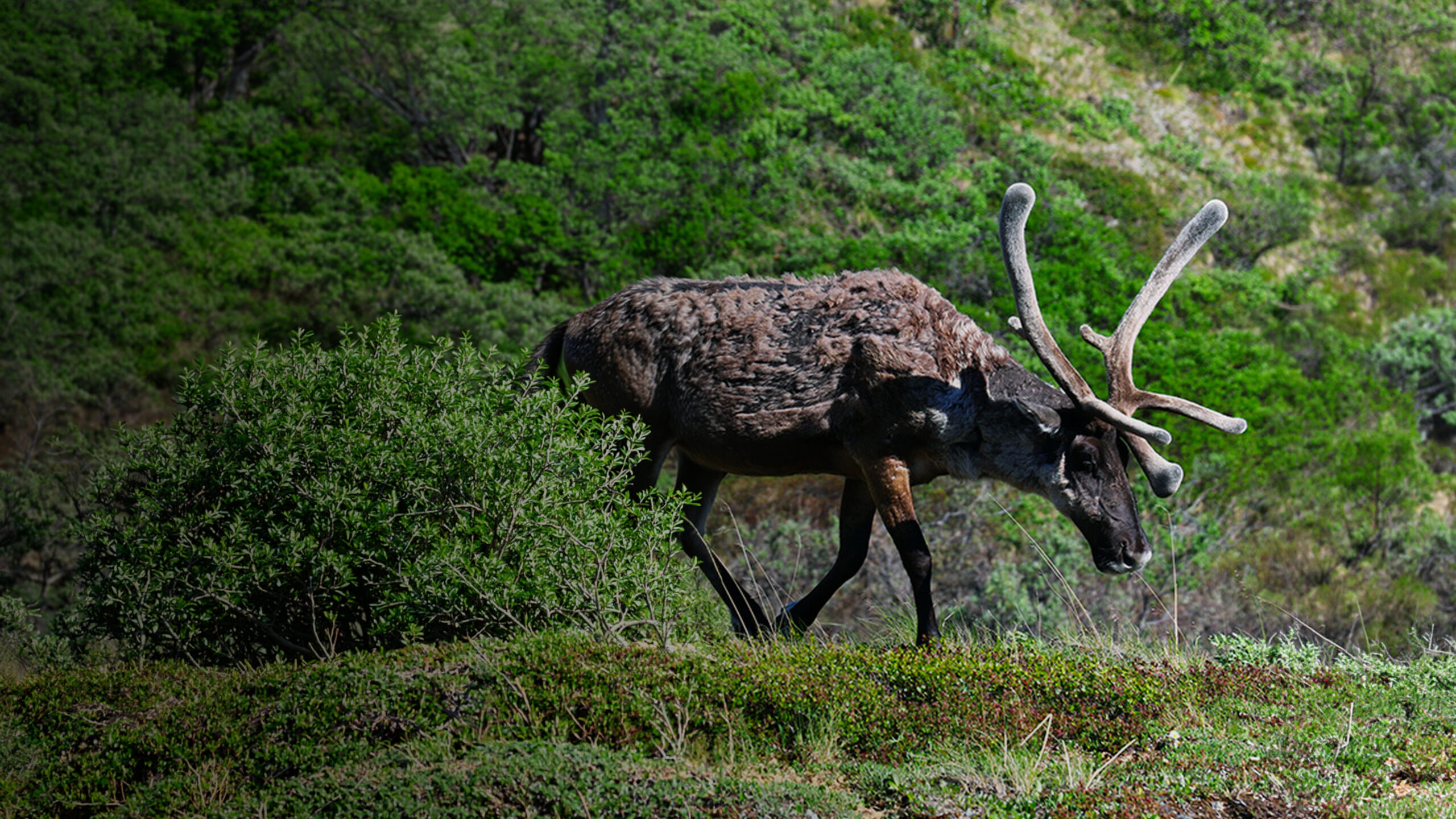
(Rangifer tarandus) The reindeer is the only deer species where both females and males have antlers. The wild reindeer was eradicated in our country in the 19th century. “Swedish reindeer” are now domesticated reindeer, kept by the Sámi. The reindeer is one of the most useful domestic animals. The Sámi name for the male reindeer is sarv, and the female is vaja. A castrated male reindeer is called härk and is used as a draft animal. Alive, the reindeer is used as a draft and pack animal (clövjereindeer), and the females can also be milked. When dead, virtually all parts of the reindeer are used after slaughter. Lichens of various kinds are the reindeer’s most important food. Reindeer are specially adapted to digest and make use of this sparse diet. In summer, the diet is expanded with grass, herbs, leaves, and mushrooms. In winter, the reindeer can use their hooves to scrape up ground lichens under the snow cover. They also eat hanging lichen from the trees. Wild reindeer are found across the tundra regions of the entire Northern Hemisphere. In North America, the reindeer is called Caribou.
Quick facts about Reindeer
- Order
- Order Even-toed ungulates (Artiodactyla)
- Family
- Deer (Cervidae)
- Weight
- 70–150 kg (males), 40–100 kg (females)
- Lifespan
- approx. 20 years
- Mating season
- September–October
- Gestation
- 8 months
- Young
- Born in May–June






Our Mission
More and more animal species around the world are threatened with extinction, and the list of species at risk of disappearing continues to grow. The conservation of threatened species is now a shared responsibility for zoos around the world. Our aim is to create greater understanding of the irreplaceable value of nature and biodiversity. Through research, we learn more about the animals, giving us greater opportunities in our work to conserve endangered species. Our three most important missions as a zoo are: conservation, education and research.