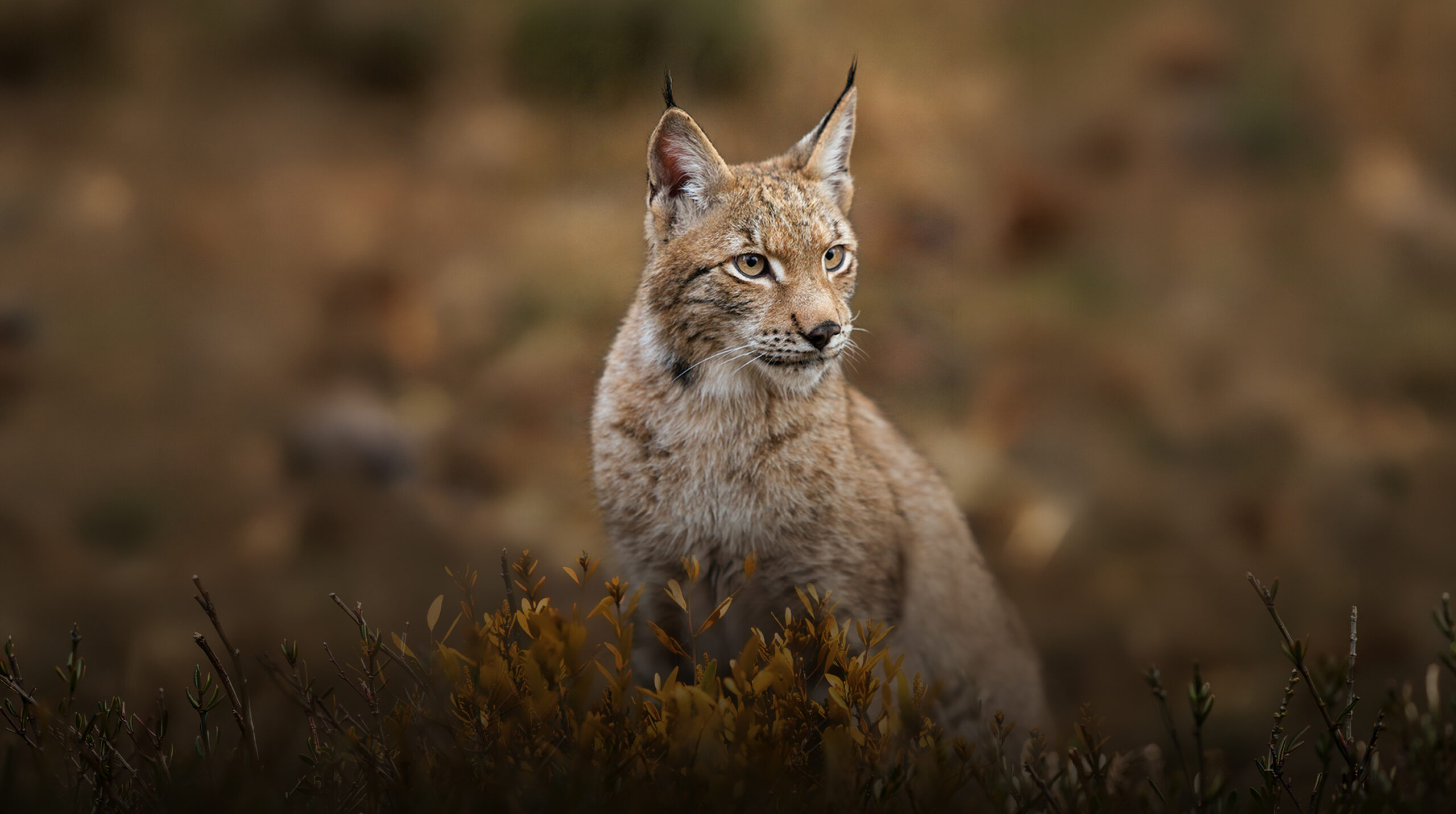
(Lynx lynx) The lynx has been present in Sweden since the Ice Age. Today, there are likely over 1,000 lynx living in Sweden. Otherwise, lynx are found across large parts of the Northern Hemisphere, divided into four species: Iberian lynx (Spain, Portugal), Canada lynx (North America), Eurasian lynx (Europe and Asia), and bobcat (North America). The tail—with its black tip—and the head—with white ear spots and a white border around the eyes—are clear “signal points” on the lynx’s body. Additionally, the lynx has scent glands on its cheeks and paws, which complement urine markings as scent sources. An adult lynx eats about 1 kg of meat per day. In our country, hares and roe deer are the most important prey, especially during winter.
Quick facts about Lynx
- Order
- Order Carnivora
- Family
- Felids (Felidae)
- Weight
- 20-35 kg (males), 15-25 kg (females)
- Lifespan
- Up to 20 years
- Mating season
- Occurs during March-April
- Gestation
- 68-70 days
- Young
- Born in the den in May-June; usually 2, sometimes 3, which are blind at birth and weigh approx. 0.3 kg.







Hear more about the lynx
Learn more about the lynx's daily life, habits, and life in the wild
Our Mission
More and more animal species around the world are threatened with extinction, and the list of species at risk of disappearing continues to grow. The conservation of threatened species is now a shared responsibility for zoos around the world. Our aim is to create greater understanding of the irreplaceable value of nature and biodiversity. Through research, we learn more about the animals, giving us greater opportunities in our work to conserve endangered species. Our three most important missions as a zoo are: conservation, education and research.