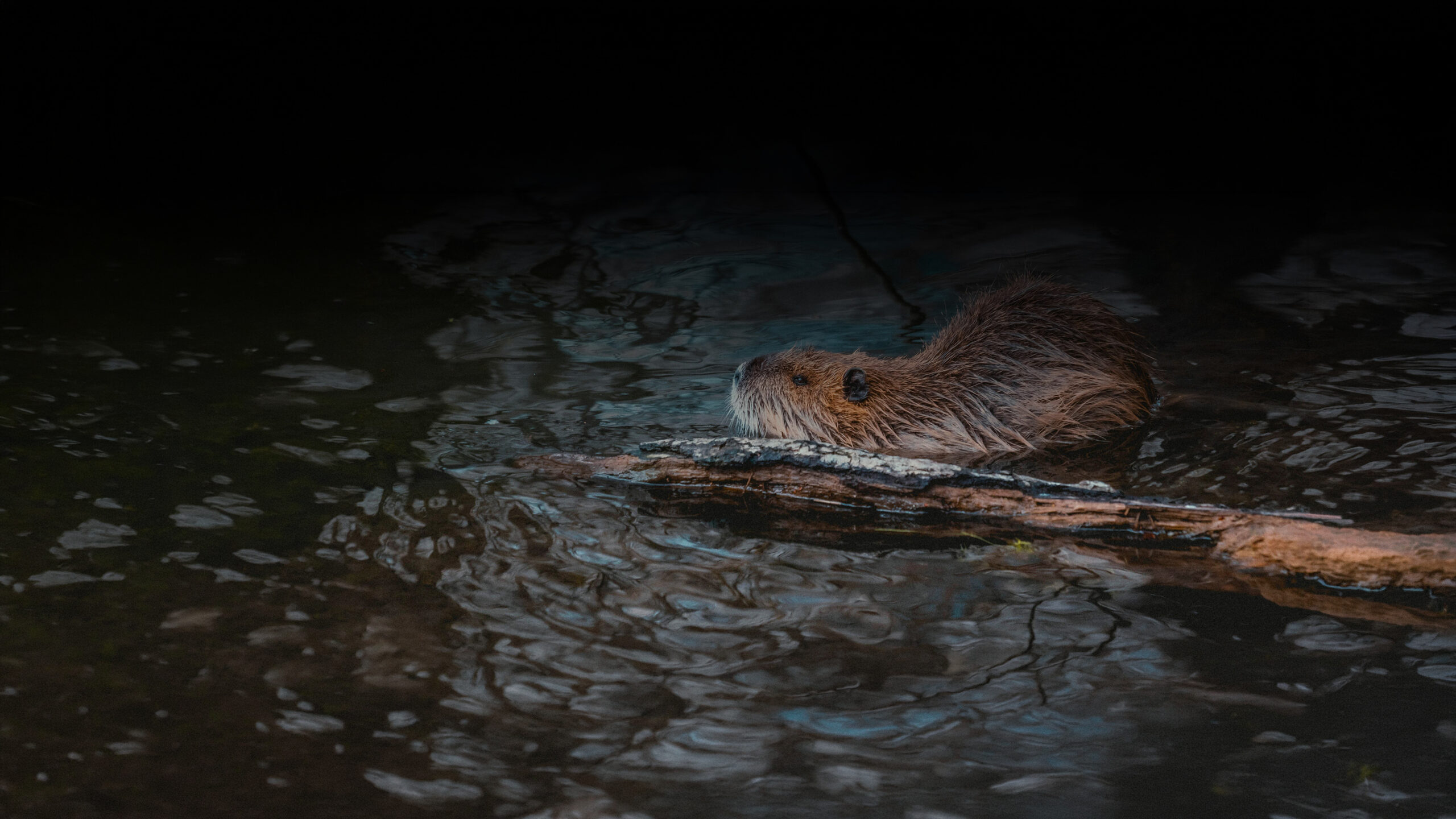
(Castor fiber) The beaver is known as the “lumberjack” and “master dam builder”. It is the largest rodent in the Northern Hemisphere. After having been endangered in several countries, the beaver has today recovered quickly thanks to extensive protection measures and reintroduction into its original habitats. The beaver is active at dusk and at night and lives in lifelong pair bonds. They are excellent swimmers, dive, and can stay underwater for up to 15 minutes. The beaver digs burrows in the riverbank and builds lodges of branches and mud, with an entrance that is always below the water. They fell trees up to 50 cm in diameter. The beaver eats an exclusively plant-based diet: shoreline vegetation, leaves, and the softer parts of bark.
The beaver’s fur is brown and very dense. The fur protects the animal from getting chilled. Beavers continuously groom their fur and coat it with an oily substance, castoreum. The tail is flattened, scaly, and spade-like. Their hind feet have webbing between the toes.
Quick facts about Beaver
- Order
- The order Rodents (Rodentia)
- Family
- Beavers (Castoridae)
- Weight
- 12–30 kg
- Lifespan
- 15–20 years
- Mating season
- Occurs during February–March
- Gestation
- approx. 15 weeks
- Young
- 1–4 fully furred young with open eyes that can swim and dive after just a couple of days. Nursed for 2 months and stay with the family for 2–3 years.







Our Mission
More and more animal species around the world are threatened with extinction, and the list of species at risk of disappearing continues to grow. The conservation of threatened species is now a shared responsibility for zoos around the world. Our aim is to create greater understanding of the irreplaceable value of nature and biodiversity. Through research, we learn more about the animals, giving us greater opportunities in our work to conserve endangered species. Our three most important missions as a zoo are: conservation, education and research.